The Early Academic Years of Charlie Nwa Mgbafor:
“Charlie Nwa Mgbafor” has not only stood out as a household name in Anambra State and beyond, but also stands out as one of the names many perceive as unbefitting to the quality and personality of its bearer, despite being spiced up with a little English word — “Charlie”.
This is based on the premise that, even in many Nigerian movies, names like Mgbafor, Mgbeke, Mgborie, etc, are you usually given to or perceived as names of typical village women and local champions, who can barely understand any other English word, other than “Come” and “Go”. This popular perception is also usually extended to the children of the such people, especially in concordance with the popular Igbo adage that “Ihe agwọ mụrụ aghàghị̀ ito ogologo”, contextually meaning that snakelets (offsprings of a snake) must surely look like (be as a long as) snake.
However, in the case of the Charlie Nwa Mgbafor we know, these two popular perceptions highlighted above are popularly disproved, as the Nwa Mgbafor now stands out as world-renouned professor, proving to the world that Nwa Mgbafor can actually become an intellectuals; while also popularizing and still proudly retaining the “Mgbafor” as part of his name.
Be it as it may, this Charlie Nwa Mgbafor actually started from somewhere, while his intellectual prowess went through some developmental pathways, before his eventual rise to the global echelon.
How did these happen?
In the quaint town of Isuofia, a young Chukwuma Soludo embarked on his educational odyssey that would later shape his destiny. Born on the 28th of July, 1960, Soludo’s early life began under the nurturing care of his father, Chief Simeon Nwankwo Soludo. Despite the tragedy of losing his mother at the tender age of eight, he forged ahead with resilience, growing up under the guidance of his father, who was then a driver at NICEM, Enugu.
His academic journey commenced at the Amorji Primary School, Isuofia, laying the groundwork for what would become a remarkable educational trajectory. The foundations of his intellectual prowess were laid during these early years, setting the stage for a brilliant academic career. It was during this period that he earned the moniker “Paragon” among his schoolmates, a testament to his exemplary character and intellectual capacity.
Soludo’s academic journey continued at the Uga Boys High School, where he achieved his West Africa School Certificate. The echoes of his excellence reverberated through the halls of his secondary school, where he left an unbroken academic record. The nickname “Paragon” became more than a label; it encapsulated the essence of Soludo’s academic brilliance, becoming a source of inspiration for his peers.
His formative years were marked not only by academic prowess but also by a display of leadership qualities. Soludo assumed pivotal roles, serving as the Head Boy in his Primary School and later as the Senior Prefect in Uga Boys High School. These early leadership roles provided a glimpse into the innate qualities that would characterize his future endeavors.
Soludo’s journey through primary and secondary education was not merely a sequence of academic milestones; it was a narrative of resilience, intellectual brilliance, and emerging leadership. These foundational years laid the groundwork for the academic paragon that Chukwuma Soludo would evolve into, foreshadowing the remarkable journey that awaited him.
His transition from Uga Boys High School to the University of Nigeria Nsukka marked the next chapter in his academic journey. In 1984, he graduated with a First Class Honours degree in Economics, a testament to his unwavering commitment to academic excellence.
In line with the popular Igbo adage “Ụra tọba ụtọ, è kwòbé ya èkwòbé”, the accolades continued as Soludo pursued further education, obtaining an MSc in Economics in 1987 and a PhD in Economics in 1989, all from the prestigious University of Nigeria Nsukka.
The University recognized his exceptional academic achievements by awarding him the Vice Chancellor’s Prize for the Best Graduating Ph.D. candidate in the 1988/89 session. This period not only solidified Soludo’s standing as an academic luminary but also showcased his dedication to pushing the boundaries of economic knowledge.
Soludo’s academic pursuits extended beyond the borders of Nigeria after he ventured to Lagos State in 1989 for the compulsory National Youth Service Corps (NYSC) program. This experience broadened his perspectives and laid the groundwork for his future international engagements.
The young academic’s insatiable thirst for knowledge led him to esteemed institutions worldwide. He became a visiting professor at the Brookings Institution in Washington DC, a Rhodes Scholar at the University of Oxford, a Fellow of the Wolfson College, and a visiting scholar at the University of Warwick. Soludo’s global academic sojourn enriched his understanding of macroeconomics, research methodologies, and econometric modeling.
His intellectual journey continued to evolve beyond the walls of academia, as his transition from UNN marked a pivotal moment, leading him into the realm of practical application of economic principles. The corridors of higher education had prepared him well, but the real test awaited in the arenas of policy formulation, economic management, and international consultancy.
Furthermore, Soludo’s involvement in prestigious institutions such as the International Monetary Fund (IMF), the World Bank, the United Nations Economic Commission for Africa, and others underscored his influence on the international economic stage. His role as a member of the Chief Economist’s Advisory Council of the World Bank further solidified his position as an intellectual force in the global economic arena.
Soludo’s transition from the realm of pure academia to the helm of the Central Bank of Nigeria (CBN) as the Governor of the Nigeria’s apex bank marked a phase where intellectual prowess translated into tangible policy actions. As the Chief Economic Adviser and later Governor of the Central Bank, he approached economic governance with an unwavering commitment to innovation and reform.
In parallel with these efforts, Soludo championed initiatives that extended beyond the financial sector. His transformation of the Federal Office of Statistics into the National Bureau of Statistics was a move toward evidence-based policymaking. Also, the rehabilitation of the Nigerian Security Printing and Minting Company during his tenure as the CBN Governor not only addressed Nigeria’s security printing needs but positioned it as a hub for West and Central Africa, showcasing his strategic regional perspective.
In conclusion, Chukwuma Charles Soludo’s life as an intellectual has, indeed, been a multifaceted journey, seamlessly transitioning from academic excellence to global consultancy and, ultimately, governance. The narrative weaves through the early academic years, triumphs at UNN, international engagements, and intellectual governance at the apex of Nigeria’s financial landscape.
His current role as Governor of Anambra State underscores the enduring impact of intellectual leadership on the trajectory of a society. Soludo’s narrative is not just a chronicle of personal achievements; it is also testament to the transformative power of intellectual acumen in shaping the destiny of a nation and a people at large.
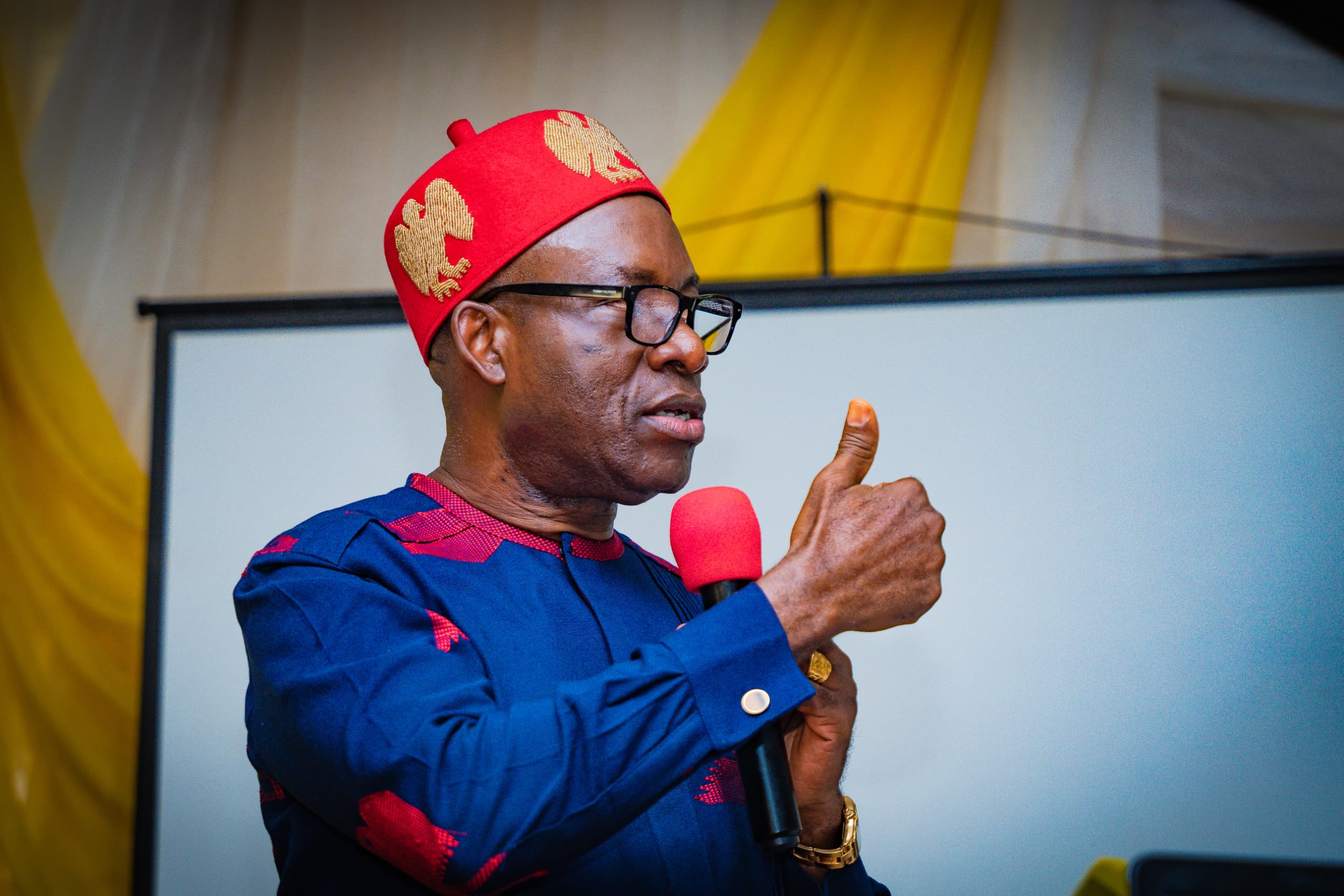
Ladies and gentlemen, behold the paragon and intellectual, Chukwuma Charles Soludo at 64.
Happy Birthday, Charlie Nwa Mgbafor.