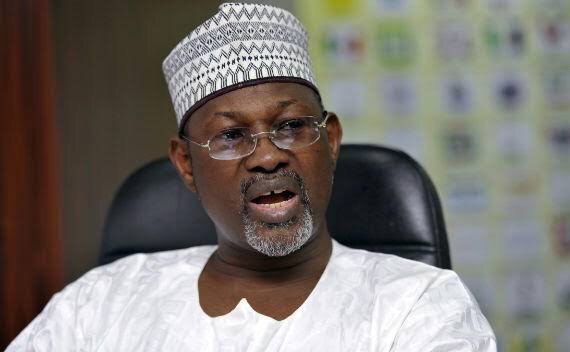
Former Chairman of the Independent National Electoral Commission (INEC), Attahiru Jega, has insisted that politicians, not academics, are behind attempts to undermine Nigeria’s electoral integrity.
He said the involvement of professors in election duties has largely strengthened the process, despite isolated incidents of wrongdoing.
Speaking on Thursday at The Platform, an annual Democracy Day event hosted by Covenant Nation in Lagos, Jega defended his decision to involve university lecturers and vice-chancellors in electoral duties during his tenure as INEC chair from 2010 to 2015.
According to Jega, many of these academics were recruited through a transparent process, often with recommendations from vice-chancellors across the country.
“Election was terrible by the time we came to INEC. I was lucky, I was a co-chairman of the Committee of Vice Chancellors before I went to INEC,” he said.
“So, I used the vice-chancellors to help us get academic staff with good, transparent selection criteria, which they vouch for. That’s how we started using academic staff during elections,” he explained.
Jega pointed out that despite bribes and inducements often offered by desperate politicians, most professors have upheld their professional integrity.
“Up till 2015, in fact after the 2011 elections, the NBA (Nigerian Bar Association), and the NSE (The Nigerian Society of Engineers), all came and said they wanted to participate in the elections but we said: ‘Look, when you are doing something and it works, why change it?’” he recalled.
“So, we stuck with the professors, and I can tell you frankly, the level of integrity they brought to the election (is unmatched).”
He emphasized that professors, especially senior ones with long-standing careers, are unlikely to risk their reputations over elections.
“A vice chancellor who has served 35 years in the university system, who has a few years to retire, a substantial overwhelming majority of them are not going to damage their integrity that they built over the years on the matters of election,” Jega stated.
While acknowledging that a few cases of misconduct have occurred, Jega urged Nigerians not to generalize based on isolated incidents.
“Of course, politicians use all methods of inducements, but the fact that only about two professors, not to talk of vice-chancellors, have been prosecuted for electoral offenses, frankly, is statistically insignificant,” he said.
“It is terrible that it has happened, but I don’t think it is something we can use to say we shouldn’t use professors in the conduct of elections.”
Indeed, two notable convictions were cited. In April 2025, the Court of Appeal in Calabar upheld the conviction of Peter Ogban, a soil science professor at the University of Calabar, who had earlier been sentenced to three years in prison for manipulating election results during the 2019 senatorial polls in Akwa Ibom North-West.
Similarly, in February 2025, Professor Ignatius Nduk, a Human Kinetics lecturer from the University of Uyo, received a three-year sentence from an Akwa Ibom High Court for publishing false results during the 2019 Essien Udim State Constituency election.
Still, Jega, currently the Pro-Chancellor and Chairman of the Governing Council at Sa’adatu Rimi University of Education, Kano, and a member of the International Elections Advisory Council, maintains that such isolated cases should not overshadow the integrity and value that academics bring to Nigeria’s elections.