By Izunna Okafor, Awka
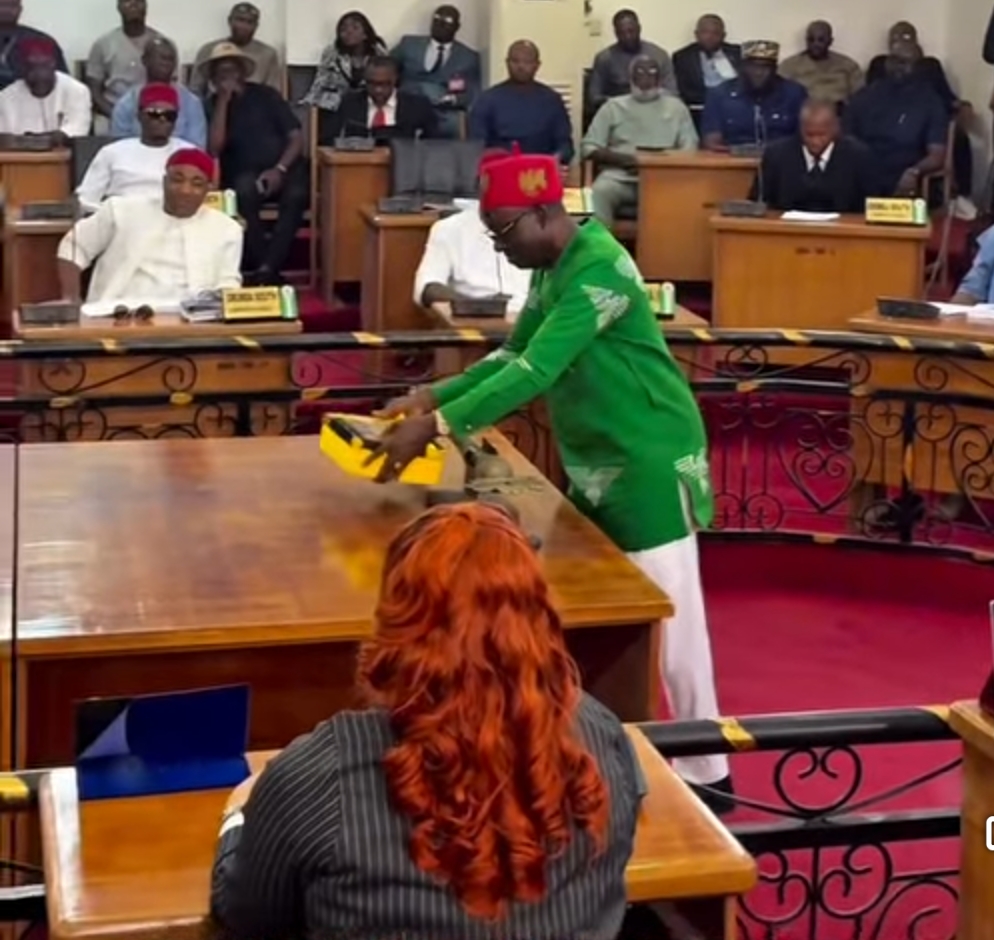
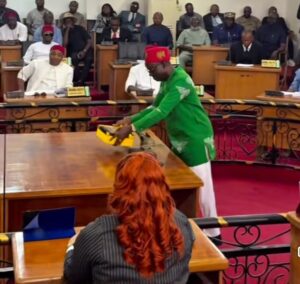
Anambra State Governor, Prof. Chukwuma Charles Soludo, CFR, on Tuesday presented a draft 2026 budget of ₦757,884,487,705 billion (approximately $520 million) to the Anambra State House of Assembly, unveiling an ambitious financial plan themed “Changing Gears 3.0: Solution Continues.”
Witnessed by the Deputy Governor, Dr. Onyekachukwu Ibezim, members of the State Executive Council, and other top government functionaries, the draft budget presentation, held at the Assembly Complex in Awka, also doubled as a comprehensive review of his administration’s scorecard since 2022 and a roadmap for consolidating the transformation agenda in 2026.
Speaking shortly after presenting the draft budget, Governor Soludo, who began by thanking Ndi Anambra for what he described as an unprecedented 73% re-election mandate given to him and his Deputy, Dr. Onyekachukwu Ibezim, in the just-concluded November 8 governorship election in the state, emphasized that the landslide victory re-energized his team for faster and greater delivery in the years ahead. According to him, the renewed mandate is a loud, historic vote of confidence, as well as a clear signal that Ndị Anambra want the Solution to continue.
The governor also praised the 8th Assembly for what he described as their “exceptional productivity,” recalling the passage of 11 landmark bills in 2024 by the House and another 11 so far in 2025. He described the legislature as a strong, progressive partner in the march toward the Anambra Vision 2070, the 50-year development blueprint targeted at building an African Dubai-Taiwan-Silicon Valley–styled smart mega-city.
Reflecting on his three years and eight months in office, Soludo declared that the state had been “firing on all cylinders,” with verifiable achievements visible across the five pillars of his Solution Manifesto.
The governor reported impressive gains in security, saying Anambra has emerged “one of the safest, if not the safest, states in Nigeria,” with normalcy fully restored to previously troubled zones such as Ihiala. He reiterated his administration’s zero-tolerance approach to criminality, touting, cultism, drug offences, and the activities of “dangerous native doctors who aid criminal idolatry.”
On infrastructure, Soludo highlighted what he described as the most aggressive road construction era in the state’s history. He announced that over 900 kilometres of roads are presently under construction, with 600 kilometres fully asphalted in under 44 months—an average of 14 km of new roads every month—alongside 700 km of rehabilitated old roads and the building of eight major bridges. The governor also celebrated the completion of the Ekwulobia Flyover and Bus Terminal, the dualization of more than 100 km of trunk roads, and the Aroma Link Bridge in Awka. He noted that his administration finally broke the 34-year jinx of not having a befitting Government House, with the newly completed “Light House” now fully occupied.
Soludo further announced major historic strides in water schemes, power resources, urban renewal, and a comprehensive state rail masterplan already completed.
“For the first time in decades, urban and semi-urban water schemes are back and functional, restoring access to clean, reliable water for our people across communities. Our comprehensive Rail Transport Masterplan is ready,” he stated.
Also among the key highlights in the governor’s progress report was the commissioning and rapid success of the Solution Fun City in Awka, described as the largest leisure and entertainment complex in West Africa, and which attracted over 100,000 visitors within its first three and half months of operation.
Other major ongoing tourism projects, according to him, include the 10-storey Five-Star Hotel, the Awka City Park, the Agulu Lake Beach Resort, and what the governor described as “one of Africa’s largest shopping malls,” soon to be commissioned in Awka.
On education, Soludo declared that the state was witnessing a historic revolution. He noted that the employment of 8,115 teachers in one and half years had ended the era of schools without teachers. He maintained that free education from early childhood to senior secondary school remains firmly in place, with enrolment in public secondary schools jumping by 47% and primary schools by 27%, making Anambra the state with the lowest number of out-of-school children in Nigeria. Public schools, he said, have regained their lost glory, with students winning national awards and teachers emerging as some of the best in the country. Twenty-two fully equipped smart schools have also been rolled out.
He reaffirmed ongoing government support to mission schools and disclosed that over ₦1.2 billion is spent monthly to cover salaries of government-posted teachers in returned mission schools.
On health, Soludo stated that the free antenatal and delivery policy had benefitted over 161,197 pregnant women, including 594 free caesarean operations, all with zero mortality. Four out of the five new general hospitals initiated by his administration have been completed, while 326 Primary Healthcare Centres are being rebuilt, equipped, and solar-powered. The Trauma Centre at COOUTH has been completed, and preparations for Africa’s largest coordinated drug wholesale centre in Oba are nearing finalization.
The governor also celebrated progress in youth empowerment. According to him, 13,300 young entrepreneurs have graduated from the One Youth, Two Skills programme, many of whom proudly self-identify as “young millionaires.” Under the Solution Innovation District, he said 95,735 youths have received digital skills training, with the iconic SID Building nearing completion as the state’s technological nerve centre.
Soludo also referenced his agricultural and poverty-reduction initiatives, including the revival of M.I. Okpara’s oil palm revolution and the mass distribution of coconut, ukwa, soursop, and other seedlings aimed at transforming over 200,000 households. The zero-tax policy for petty traders and vulnerable workers remains in force, and over ₦22 billion in gratuity arrears have been cleared since 2022.
The governor highlighted reforms in public service, digitalization of land administration, environmental control efforts, and major strides in fiscal transparency—achievements that recently made Anambra the No. 1 state in fiscal transparency and fiscal sustainability rankings.
Turning to the 2026 projections, Soludo revealed a proposed budget size of ₦757,884,487,705 billion, which represents a 24.1% increase from the 2025 budget of ₦606,991,849,118. The 2026 draft budget has capital expenditure dominating at 79% (₦595.3 billion) while recurrent expenditure stands at 21% (₦162.6 billion). The Governor described the capital-heavy ratio as an intentional commitment to long-term development.
Sector breakdowns further presented by the Governor show significant increases across all major sectors: education (+46.9%), the social sector (+31.4%), economic sector (+26.7%), infrastructure (+27.7%), administrative sector (+12.2%), and health (+13%).
The governor explained that the budget deficit, estimated at ₦225.7 billion (29.8% of total budget), would only be financed —if necessary—through hybrid financing options including possible privatization proceeds, increased IGR, or concessionary borrowing mostly for bankable-project financing. He insisted that his administration has not borrowed since taking office and may still maintain that record depending on execution pace.
“Since the beginning of this administration, we have not borrowed to finance budget deficits, and depending on the pace of execution in 2026, we may still not need to borrow. Our fiscal discipline remains firm,” he declared.
Soludo also admitted that the state’s weakest fiscal link remains its IGR performance. He announced that a new technology-driven revenue overhaul would be launched within weeks to block leakages, expand the tax net, and enforce compliance.
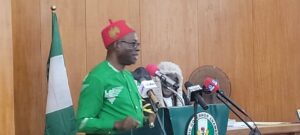
Looking ahead, the governor outlined major 2026 priorities, including expansion of mass transit, new jetties and boats, PPP-driven rail projects, development of three new cities (Awka 2.0, Greater Niger, and Aerotropolis/New Industrial Commercial City), commencement of the Anambra Mixed-Use Industrial City, intensified urban regeneration, and fast-tracking the ease of doing business.
He also announced plans to construct new public primary schools in 30 communities currently without any, establish two specialist tertiary institutions, complete the College of Nursing, begin work on a specialist teaching hospital focused on oncology, complete the SID Building, and deepen digital-economy projects.
Water supply expansion, power sector reforms under the newly created Anambra State Electricity Regulatory Commission (ASERC), rural electrification, grants to micro-businesses across 326 wards, and more agricultural empowerment schemes also top parts of his 2026 commitments.
Describing the budget as a blueprint of disciplined growth, Soludo said the entire proposal remains modest for a state of Anambra’s economic size and developmental ambition, especially given Nigeria’s weakened currency and inflationary pressures.
The governor closed his speech with gratitude to the 8th Assembly, civil servants, teachers, security agencies, traditional rulers, communities, private partners, the Federal Government, and Ndi Anambra at home and in the diaspora, assuring that “every kobo will be deployed prudently, transparently, and with maximum value.”
“Anambra is on the rise,” he declared. “And with your mandate, we will build the prosperous, livable, smart homeland we envision.
Watch the video of the draft budget presentation below: