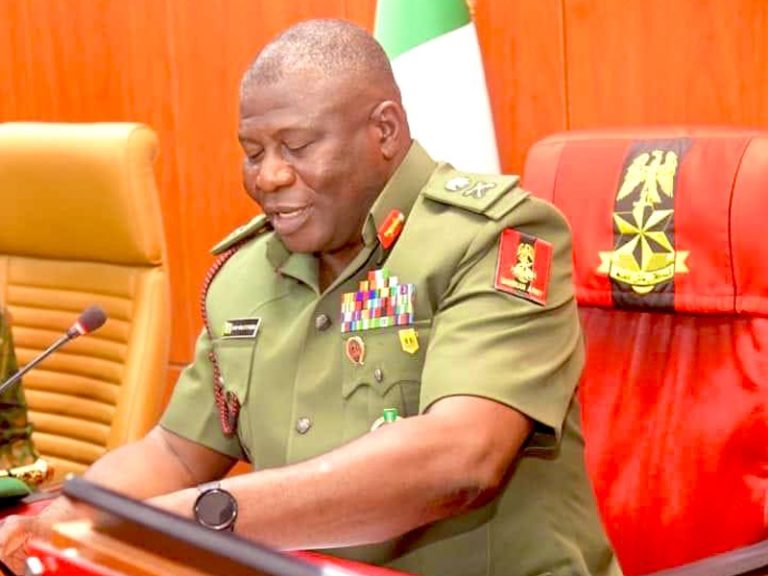
The Chief of Army Staff (COAS), Lieutenant General Olufemi Oluyede, has issued a one-month ultimatum to troops of the 6 Division Nigerian Army to drastically reduce illegal oil bunkering in the Niger Delta region.
Speaking during a working visit to Rivers State on Tuesday, the COAS stressed the urgent need to boost the nation’s dwindling oil production, directly linking it to the rising cost of living.
General Oluyede highlighted the critical role of the military in protecting Nigeria’s oil infrastructure, stating that the country’s economy is heavily reliant on oil revenue.
He expressed concern over the significant revenue losses caused by pipeline vandalism and other criminal activities in the Niger Delta, the nation’s oil hub.
The COAS directly attributed the weakened Naira and subsequent inflation to the decline in oil production.
“In the next one month, I must find changes here. Oil production must go up at all costs,” General Oluyede declared.
He urged troops to adopt more proactive strategies in securing oil infrastructure, acknowledging the challenges they face but emphasizing the need for increased effort in protecting national assets.
The COAS issued a stern warning against any troop involvement in illegal activities, stating that he would deal decisively with anyone found culpable.
He addressed the troops both as a father and a leader, appealing to their sense of duty while simultaneously emphasizing the consequences of inaction.
General Oluyede assured the troops that their welfare was a priority, mentioning that he had already briefed President Bola Tinubu on the army’s needs, including improved accommodation, equipment, and other essential provisions.
He promised significant improvements in housing for the troops and their families.
This ultimatum comes amidst growing concerns over Nigeria’s economic stability, with the government facing immense pressure to revive its oil sector and stabilize the naira.
The success of this operation will be closely monitored as a key indicator of the government’s ability to address this critical challenge.