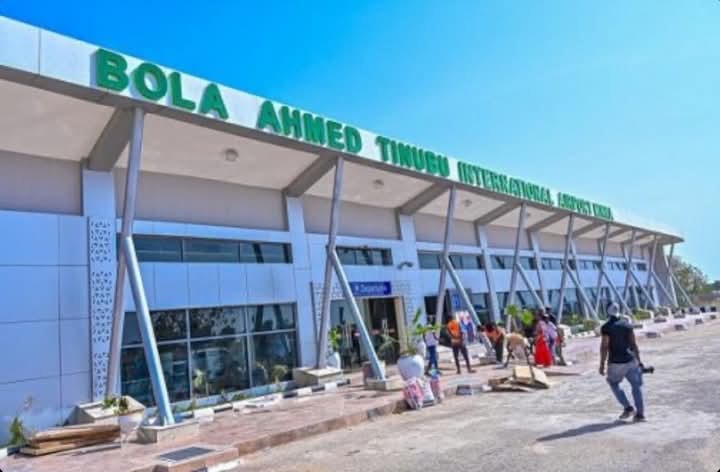
In a significant development for Nigeria’s aviation sector, the Federal Government has officially declared the Bola Ahmed Tinubu International Airport in Minna, Niger State, as the designated alternative to the Nnamdi Azikwe International Airport in Abuja.
The declaration was made by the Minister of Aviation, Festus Keyamo, during the inaugural flight commencement of Overland Airways at the newly renamed Bola Ahmed Tinubu International Airport on Wednesday, April 23, 2025.
Keyamo described the airport as fully capable of handling international traffic, emphasizing its modern infrastructure and strategic potential.
“The runway is an international runway; a 747 and a tripple 7 can use this runway. Why over the years this has been underutilised is still a puzzle,” the Minister said.
He further asserted the airport’s readiness to serve as a reliable alternative to the Abuja airport.
“Our eyes are on this airport. By the powers conferred in me, I declare Minna airport as the alternative to Abuja Airport. NCA, FAAN, take note.”
According to Keyamo, the airport meets global standards in terms of runway capacity, ambience, and location, and deserves greater attention in the nation’s aviation logistics.
“The runway is an international runway; a 747 and a tripple 7 can use this runway… The airport has a face, runway, ambience, and location similar to any other international airport worldwide.”
While the aviation sector witnessed this milestone, a political storm brewed over the Presidency’s recent approval of ₦10 billion to install a solar grid at the State House.
Umar Sani, a prominent chieftain of the opposition Peoples Democratic Party (PDP) and former spokesman of ex-Vice President Namadi Sambo, publicly criticized the decision. He argued that such an investment reflects a disconnect between the presidency and the struggles of ordinary Nigerians battling unstable electricity supply.
Sani contended that powering the State House with solar “would remove [the President] from the realities of Nigerians on issues of electricity.”
In defense, Special Adviser on Information and Strategy to President Bola Tinubu, Bayo Onanuga, compared the project to the energy model used at the United States White House, claiming the initiative was in line with global best practices.
Nevertheless, Sani maintained his stance, insisting that “the President, rather than tackling issues of epileptic power supply in the country, has chosen to give himself energy security while Nigerians remain in darkness.”
As the federal government juggles infrastructural expansion and internal criticism, the contrasting developments underscore the administration’s complex balancing act between modernization and public sentiment.