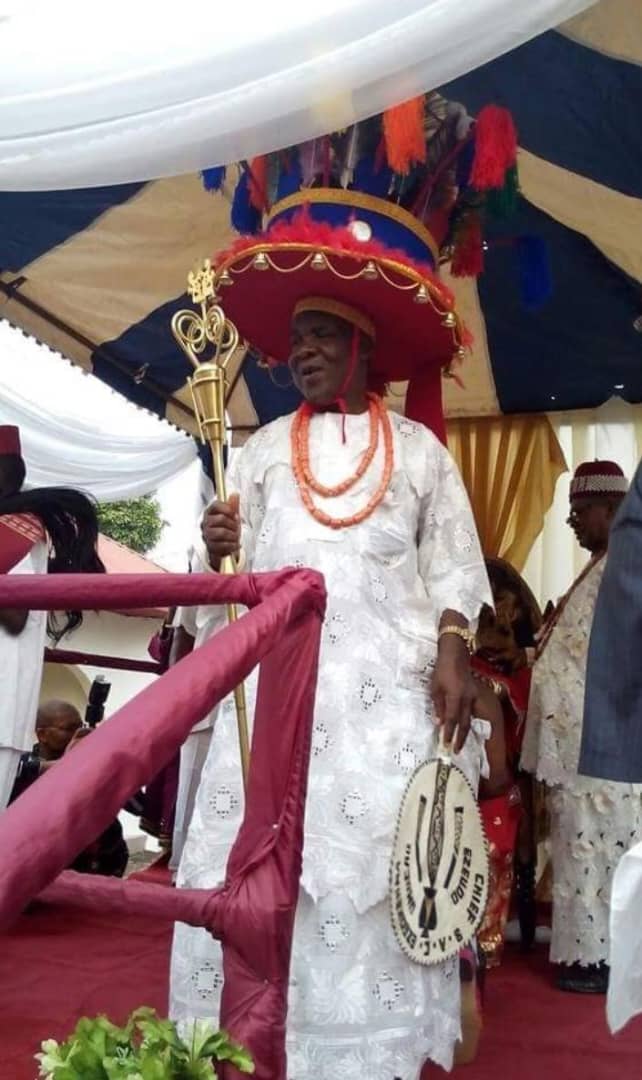
In the heart of Igbo land, where tradition holds sway and culture is the lifeblood of the people, the Iwa Ji (New Yam Festival) stands as one of the most significant rites in the Igbo calendar. It is a time when communities come together to celebrate the first harvest of the year, honoring the earth for its bounty and thanking the gods for life and sustenance. This year, the revered custodian of tradition, Ezeudo Umuchu, Chief Sylvester Ezeokenwa, performed the sacred Iwa Ji rites in a ceremony that captured the essence of Igbo culture and leadership.
Chief Sylvester Ezeokenwa, known far and wide for his commitment to Igbo tradition, is not just a figurehead of culture; he is a living bridge between the past and the present. As the foundation Chairman of APGA Onitsha South and the father of the current APGA National Chairman, Barr. Sly Ezeokenwa Jr., his legacy extends beyond the political sphere, deeply rooted in the soil of Igbo customs.
The Iwa Ji rites, though simple in their execution, are profound in their meaning. To the Igbo, the yam is not just a crop; it is life. Its cultivation and harvest are symbolic of survival, resilience, and prosperity. Ezeudo Umuchu, as the chief celebrant of the rites, embodies these very qualities. As he approached the altar with the yam in his hands, the atmosphere was charged with reverence. The first slice into the yam, the moment of Iwa Ji, signified not only the acceptance of the new harvest but also the connection between the people, their ancestors, and the gods.
In many ways, Chief Ezeokenwa’s role in performing this rite mirrors his role in the political landscape. Much like the yam that symbolizes strength and endurance, his leadership in APGA planted the seeds for a political harvest that continues to bear fruit. His wisdom and foresight as the foundation chairman of APGA Onitsha South laid the groundwork for the party’s expansion and success, nurtured by his deep understanding of both traditional and political leadership.
The parallels between the yam and leadership are striking. Just as the yam nourishes the body, good leadership nourishes the community. Ezeudo Umuchu’s leadership, both in the cultural and political realms, has been marked by patience, resilience, and a commitment to growth. His son, Barr. Sly Ezeokenwa Jr., now National Chairman of APGA, is a testament to the enduring legacy of his father’s leadership. Like the yam that regenerates each season, the values of leadership, tradition, and service are passed from one generation to the next.
As the people gathered to witness the Iwa Ji rites, it became clear that this was not just a celebration of the new harvest; it was a reaffirmation of the values that bind the Igbo people together—community, resilience, and respect for tradition. Chief Ezeokenwa, standing tall as both a traditional leader and a political figure, exemplifies the essence of what it means to be Igbo: a deep respect for the past, a strong commitment to the present, and a hopeful eye on the future.
The yam festival, like Igbo culture itself, is steeped in symbolism. The yam, with its ability to sustain life, represents the strength and resilience of the Igbo people, who have weathered centuries of change while holding fast to their traditions. Ezeudo Umuchu, as the custodian of these traditions, ensures that they are not only preserved but passed on to the next generation.
As Chief Sylvester Snr. performed the Iwa Ji rites, his son Barr. Sly Ezeokenwa Jr. stood by his side, a symbol of continuity and the passing of the torch. The younger Ezeokenwa, now at the helm of APGA, is poised to carry forward the legacy of his father’s leadership, not just in politics but in the broader cultural context of the Igbo nation.
The Iwa Ji rites performed by Ezeudo Umuchu this year were a powerful reminder of the enduring power of tradition and leadership. The yam, a symbol of life and prosperity, reflects the resilience of the Igbo people, while the leadership of Chief Sylvester Ezeokenwa continues to nurture the values of community and growth. As the knife met the yam, it was not just a celebration of the new harvest but a celebration of the values that sustain both the people and their leaders. Through the hands of Ezeudo Umuchu, the past and the future met in a single moment, reminding us all of the importance of tradition, continuity, and the unbreakable bond between the earth and its people.